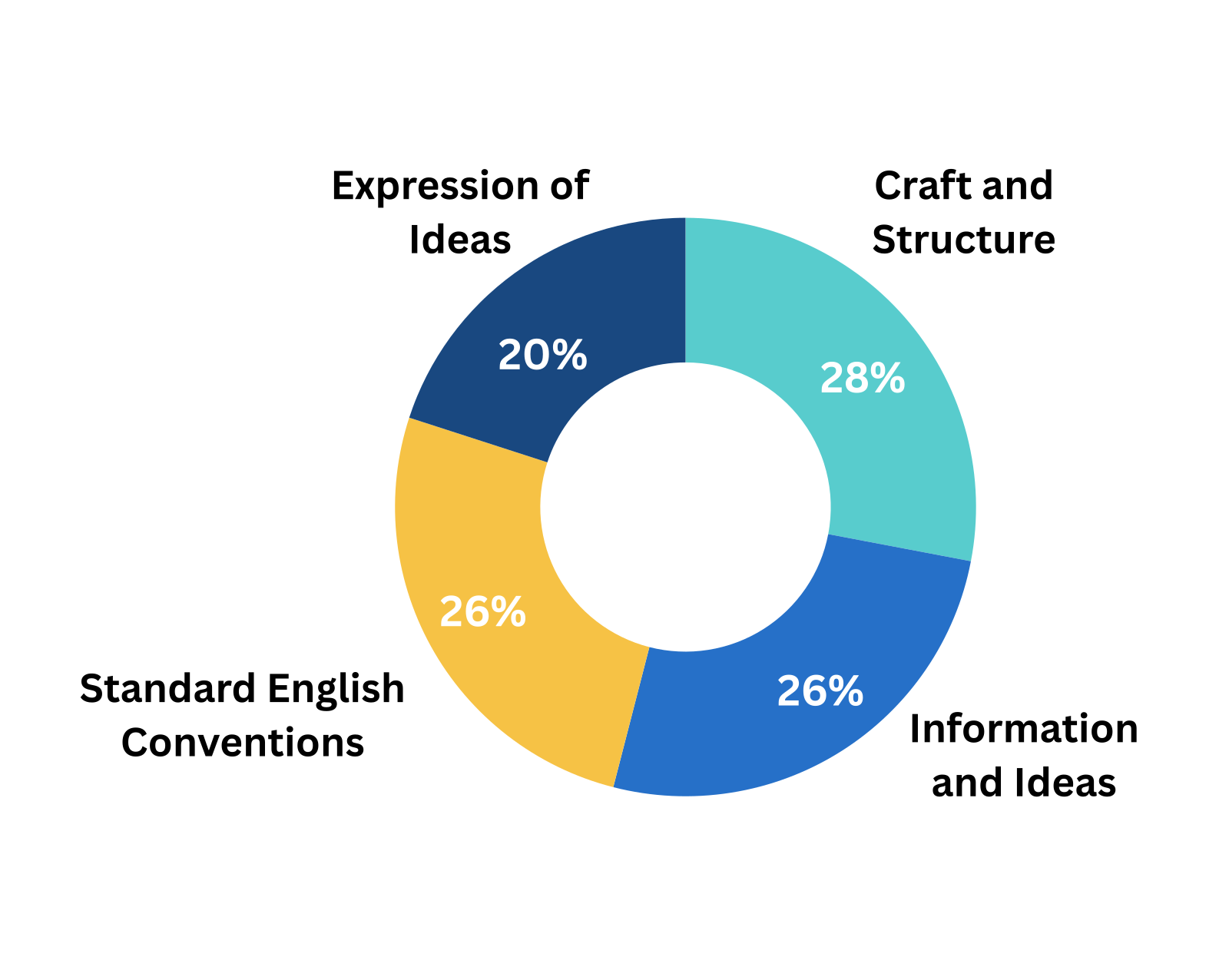
The Reading & Writing and Language sections from the previous paper-and-pencil SAT exam have now been combined into a single section, called Reading and Writing, in the Digital SAT. The questions now fall into four broad categories: Craft & Structure, Information & Ideas, Standard English Conventions, and Expression of Ideas. Furthermore, rather than a few long texts with a wider range of subjects, it now contains shorter passages with a single (discrete) question associated with each passage or passage pair.
- Predict Before Looking at Optio Avoid being misled by tempting distractors.
- Underline Keywords in Question Use the annotation tool to underline keywords and focus on exactly what’s being asked.
- Go Back to the Passage: Always find evidence from the passage before answering.
- Watch Out for Extreme Words: “Always,” “never,” “must” often signal wrong answers.
- Understand Contextual Vocabulary: Meaning depends on how the word is used.
- For Writing, Read Full Sentences: Grammar questions often require whole-sentence context.
- Make a List of all Common Grammar Rules: Subject-verb agreement, punctuation, parallelism, modifiers.
- Practice Paired Passages Separately: First understand each passage, then compare.
| Content Domain | Testing Areas | No. of Questions |
|---|---|---|
| Craft and Structure |
|
13–15 |
| Information and Ideas |
|
12–14 |
| Standard English Conventions |
|
11–15 |
| Expression of Ideas |
|
8–12 |
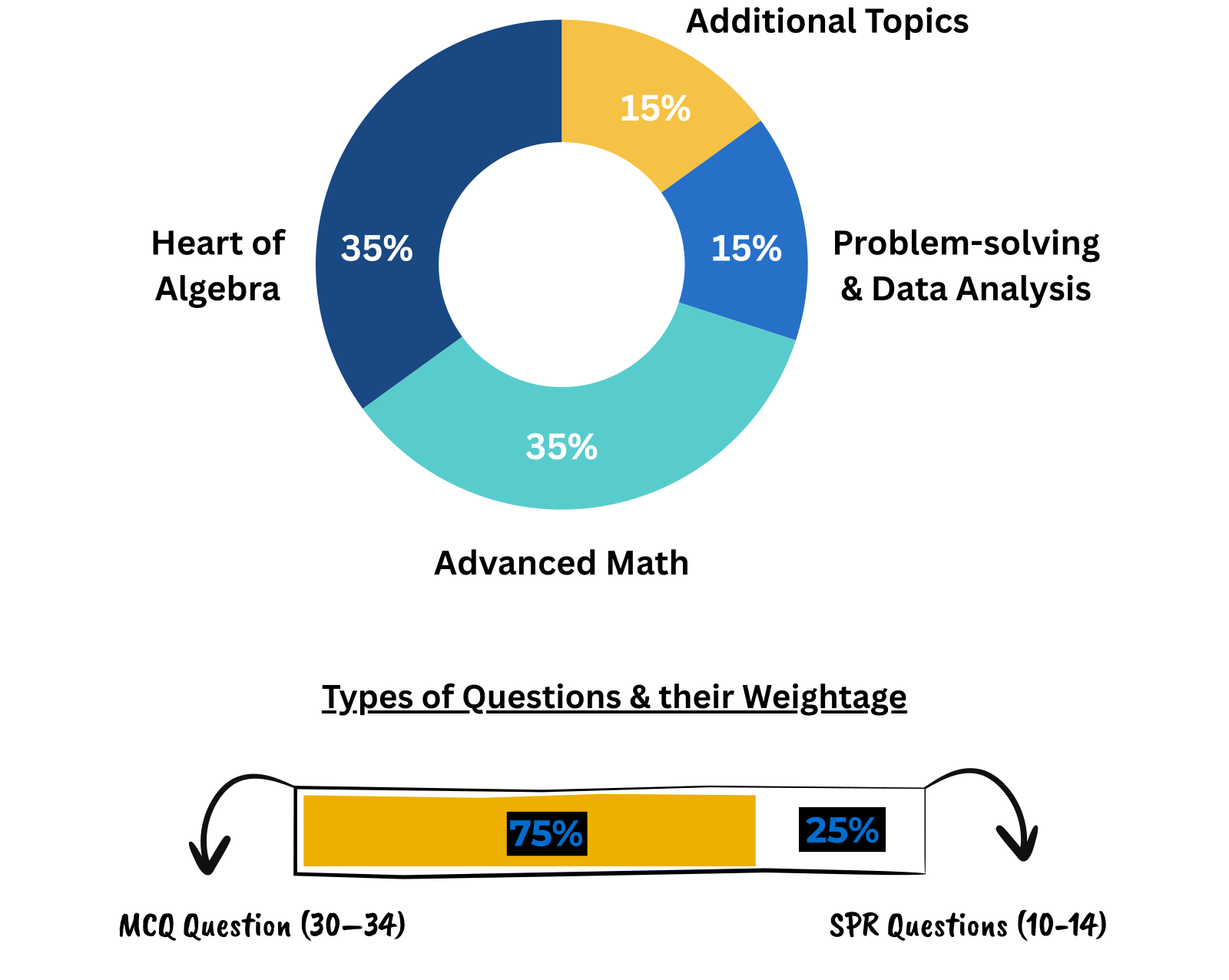
The digital SAT Math section now comprises questions from a wider range of areas covering Algebra, Advanced Math, Problem-solving & Data Analysis, and Additional Topics. Most importantly, the use of a calculator is allowed throughout the Math section. The Digital Math section includes both multiple-choice and student-produced response (SPR) questions, much like the previous SAT Math section.
- Memorize common formulas: it can save you crucial time.
- Understand the reference sheets: Familiarize yourself with the information provided on the reference sheets.
- Use the built-in Desmos graphing calculator: Practice with the calculator to become proficient in its use.
- Student Produced Response: Familiarize yourself with the correct way to enter SPR answers.
| Content Domain | Testing Areas | No. of Questions |
|---|---|---|
| Heart of Algebra |
|
13–15 |
| Advanced Math |
|
13–15 |
| Problem-solving and Data Analysis |
|
7–9 |
| Additional Topics |
|
7–9 |

Why Take The SAT?
SAT can show your potential to succeed in college or career. Most colleges accept SAT test scores as strong evidence that you're ready for college and have what they are looking for. Plus, you can choose to only send your best scores to them.
How Scoring works in SAT
The SAT exam uses a multistage adaptive design*. This is how it works:

*Note: There is no negative marking.
Can I take the SAT from home?
No, the SAT exam in 2025 will not be available to take from home. You will need to register for the SAT through the College Board website and choose a test center location.
How many times does the SAT happen in a year?
The SAT is administered eight times a year in India. These test dates usually fall in March, May, June, August, September, October, November, and December.
How to prepare for the SAT?
To effectively prepare for the SAT, focus on understanding the exam format, creating a study plan, and developing strong test-taking strategies using Backbenchers test prep material and MySAT Mentor full-length practice tests.
ACT is always better than SAT.
Neither is “better.” Both are accepted widely. The SAT focuses more on evidence-based reading and math, while the ACT includes a science section. Choosing depends on your strengths.
You should only take the SAT in Grade XII.
Many students take their first SAT in Grade XI so they have time to retake and improve scores if needed. Colleges accept the highest scores, so earlier attempts give you flexibility.
The SAT takes an entire day.
The Digital SAT is about 2 hours and 14 minutes long, much shorter than the old 3-hour paper test.
Registering for the SAT is extremely expensive.
The registration fee is $60 plus regional fees (for India, the total is around $100–120 per attempt). Fee waivers are available for eligible students.
Which countries accept SAT scores?
Other than the USA, many countries like Canada, the UK, Australia, India, Singapore etc accept SAT scores.
How many times can I take the SAT?
You can take the SAT as many times as you want. However, it is advisable to strategize your reattempts and send in your best scores to colleges.
SAT is required for which programs / countries
Over 80 countries’ universities accept SAT scores. SAT is used for most undergraduate programs.
IMPORTANT LINKS:
Take a DIAGNOSTIC TEST here to assess your test readiness: https://mysatmentor.com/Free-Demo
To practice full-length SAT practice tests, visit https://mysatmentor.com/
To know more about the SAT and how to crack it, visit https://backbencherseducation.com/
To access free SAT resources, visit: (link for free vocab, a few tests etc)
To practice Bluebook tests and how to use it, visit: https://satsuite.collegeboard.org/practice/bluebook